-
 Subscribe in a reader
Tag Archives: California
“Lake Tahoe Blue”

Lake Tahoe Blue
Spring is approaching, and I am looking forward to the time of year when Lake Tahoe shows us her finest attributes. This is the time of year when mornings are calm, skies are blue, the mountains hold that last bit of snow, and the photography is amazing! The image above, “Lake Tahoe Blue”, is a new release that depicts this time of year. Yes, I’m a little excited to experience spring in Lake Tahoe as a photographer.
I kept the composition very simple and used an elevated vantage point. This enabled me to maximize the angle necessary to capture the clarity of the water, as well as giving the inviting feeling to “jump right in”. The clear sky is where Tahoe gets its azure blue color, and this image is all about the blue.
I used my 8×10 inch film camera to capture this image. Not only do I enjoy the craft of using this type of monstrous gear, but it enables me to capture every tiny detail, and huge amounts of information. Being able to see the grains of sand and texture on the rocks, both above and below the water, brings this image to life. The snow covered peaks, also finely detailed, loom in the distance, adding drama and eluding to where this crystal clear water originates. A large gallery print of this image will absolutely invite the viewer into the waters of Lake Tahoe!
Please feel free to contact me if you would like to experience a private or group workshop here in Lake Tahoe this spring! April, May and June are the most spectacular months of the year to experience Lake Tahoe as a photographer. Clear water, raging waterfalls, beautiful sunrises and sunsets. I would love to share “my mountain backyard” with you this spring. Contact me directly through Jon Paul Gallery!
530-544-4269 [email protected] www.jonpaulgallery.com
How I See in the Field: Simple.

Ice Reflection, El Capitan, Yosemite National Park
Yosemite National Park is an interesting place to photograph. To call it iconic is an understatement. However, while the iconic vistas are a must do for photographers, the conditions must be amazing to make those images successful. After many years of visiting and observing this alluring valley, I’ve found that its beauty really lies in the subtle details found in the shadows of the “giants of the valley”. (I actually find this to hold true almost anywhere I explore!)
Now, here is where my style diverges from many. Most photographers, especially when shooting digital, will “work” a location. They will start quickly with multiple obvious images of the icon, even with mediocre conditions, and continue to change focal lengths and bracket exposures, capturing every possibility so as not to miss anything. This is more of a photojournalistic / must have volume immediately approach. I prefer to stay relaxed and open, observe, and see what I am drawn to, visually and emotionally. I don’t want to gather hundreds (or thousands) of snap shots in hopes of finding “something good” several days later while weeding through “the pile” on the computer. I am looking for one or two moving pieces of art. I want to ‘Bring the Fine Art of Nature Home”!
When I am drawn to a subject, I take my time. I don’t want to force it. I look at the main subject that grabbed my attention, and then look at the context. If I am still drawn to the subject, I see if there is a specific composition that feels right. If so, I take out my camera, choose a lens (my large format cameras only have fixed focal lengths) and look at the rough composition. Next I settle on my focal length, choose my perspective (camera height, distance from the subject, side to side angle, etc.) and finally, ELIMINATE anything I can from the composition. I prefer clean and simple. I then decide as to whether or not this composition still pulls me in. If so, it’s on to the technical stuff (which I keep minimal!).
Now that I have composed THE image, and the light is or will soon be ideal, I decide whether or not I need to use a filter. (Most often I am filter free, with a few exceptions: Split ND filters to even out exposures, polarizers for removing glare on wet rocks and foliage, and contrast filters for black and white film photography.) Finally, I calculate the exposure, load one sheet of film and capture one exposure.
The image above, Ice Reflection, El Capitan, is a stunning example of this process. With no clouds to make El Capitan appear unique and interesting in a more direct composition, I put myself in a position to explore something unique. I relaxed and maximized my chances by choosing this location (you can’t force it). I was there early, knew the light to expect, and just went with it. I walked along and let the shoreline ice grab my attention. I checked it out, moved around and watched the reflection change as I moved. The ice patterns alone were worthy of an image. When I was able to add the contrasting reflection of warm light on El Capitan with that of the blue sky, the dimension changed dramatically. For me, this image is now about pattern, detail, light, color and place. Amazing!
Notes:
I shot this image using my 4×5 inch film camera. This large format equipment has numerous benefits: The film size captures a huge amount of information. It is relatively slow to set up (encouraging me to be very considerate in my image choices). It is quite expensive to shoot (again encouraging me to be very considerate in my image choices). I can change the shape of the camera, and thus change the focal plane to match the image needs (this enables extreme critical focus and allows me to use the lens at its strongest working aperture). Each of these factors leads to the finest print quality available. I created one exposure. The exposure of the shot.
Importantly, this process of how I see, work with my large format gear and focus on “THE SHOT” is what has made me a successful gallery owner and workshop / tour leader. I am able to make photography a relaxing endeavor focused on the feelings that brought each of us to outdoor photography to begin with. I am eliminating the intimidation factor of technological overwhelm, and I am sharing the strong basic process of seeing, feeling and composing “The Fine Art of Nature”. When participants visit my gallery and view my large fine art prints on the wall, they find great relief in learning that you don’t have to be a computer engineer to do photography at the highest level. Please join me in the field!
Photo Tip:
The lesson learned here is one of the biggest I share with my workshop / tour participants. Relax, stay open and don’t force an image. The art of landscape photography begins with seeing in a way that communicates what we feel when we are lucky enough to experience natures beauty. Especially when we have travelled somewhere with the purpose of doing photography, the natural (modern) inclination is to shoot all we can. The reality is, the shot isn’t always there. I believe it is better to come away with a few beautiful, heartfelt pieces of art, than it is to grab hundreds (or thousands) of images that are mere snapshots. Furthermore, I never shoot with the mindset that “I can fix it later” or “make it art” in the computer. Enjoy the beauty in these inspiring natural places, immerse yourself in your surroundings, and use the basics to compose the art that moves you.
Equipment:
Canham 4×5 Metal Field Camera, Rodenstock APO Sironar-S 150mm lens, Fuji Provia 100 Transparency Film, Really Right Stuff BH-55 Ball Head, Gitzo 1325 Carbon Tripod, Sekonic Digital Spot Meter.
Private Workshops:
I am available for private individual or group workshops and tours near my home in Lake Tahoe, or anywhere in the world! join me when you are ready to take your photography to the next level, when you want a guide for the sweet spots of Lake Tahoe, or when you want to improve your photographic success on your next photo trip! Contact me directly: 530-544-4269 [email protected] www.jonpaulgallery.com
Seeing an Icon Differently (Firefall in B & W)

Firefall V.S. Silver Light
The Story:
The digital world is affecting landscape photography in many ways. Advances in digital equipment have made photography accessible and enjoyable for millions of people that never would have picked up a film camera. Digital communication has made many beautiful places “known” to the masses. This combination of factors is encouraging large numbers of people to make pilgrimages to these beautiful iconic spots with the purpose of re-creating images they have seen in magazines and on the web. While these locations have become icons for a reason (beautiful is beautiful!), there comes a time when they have been overdone. We can get so caught up in shooting a scene the way we expect to see it, that we often miss, or even consciously pass up, spectacular alternatives that Mother Nature presents to us in the exact same location. We shut down to the many possibilities that create real magic and excitement in nature.
The above images are perfect examples of the iconic expectation v.s. an unexpected possibility. The image on the left, known as the “Fire Fall” is the expected image. During a brief window of only two weeks each year, the sun sets at just the right angle to illuminate Horsetail Falls, in Yosemite National Park, with beautiful sunset color as the cliffs on either side of the falls become shaded. While this image would have benefitted greatly from heavier water flow, it is still a pleasing representation of an iconic event. I like the image and will make it available to my collectors.
Now, let’s consider the black and white image on the right. I created this image while most other people were merely viewing the scene waiting for the expected “Fire Fall”. I noticed that the evening light, as it narrowed toward the middle of the cliff, gleamed with a magical silver light, creating what appeared to be an elongated heart around the waterfall. This light created a monotone scene, contrasting strongly against the shaded areas of the cliff face. Importantly, I felt this image, and envisioned it in black and white. Like most successful images, this was not an afterthought. I was emotionally moved to create this composition. There was purpose to my shooting (although unplanned). I had to do this! People kept asking what I was doing, and even after I shared what I was envisioning, they were quite content to wait for the same image the crowd was there to see. Fair enough. I now have an image that I am extremely moved by, and which is vastly more dramatic than the light show we had expected. Being open enough to allow your emotions to move you toward a vision is where “the fine art of nature” elevates photography to an art form.
The lesson here is, while it is certainly fine to let the possibility of an iconic image motivate you to visit a particular location, stay open to all possibilities that may present themselves. Often, the unexpected image is the one you will be most proud of. Don’t force the issue for the sake of being different, let it happen naturally. As you build experience, your personal style will develop. Be your own artist, not a copy of someone who has probably copied someone before them.
Enjoy the View!
Photo Tip:
Tip number one, as mentioned above, use available knowledge of iconic locations and conditions to get yourself to the “right spots at the right time”. THEN, stay very open for new and different photographic possibilities. While other people lay around during the day (usually working on the computer trying to make a mediocre shot “good”), get out and scout. I like to fill every available minute on my photo trips with “being out”. Drive the area, look at maps, hike to spots that may be interesting, go for a trail run or bike ride, etc. Figure out your own vision for the area and plan the right time to return to that spot. I like to use the outdoors as my gym. There have been many times when I have done a trail run or hike and come across a new and exciting subject. This shouldn’t feel “hard”. Stay open and see if something presents itself to you. It is very gratifying to “feel” an image. That is “the fine art of nature”. Compare that to how you feel when asking someone in the lineup of photographers, “is that it?”. (Personally, physical exertion opens my mind and spirit to what is around me in a very different and positive way, truly opening my eyes to what I feel!) As the example images above show, sometimes staying open and feeling your own vision simply entails seeing a version of the iconic shot in different light, or with different eyes.
Don’t let yourself get caught up in a technical mindset. Their are so many possibilities with digital photography that many people get caught up in the “engineering”. A majority of people that come to my workshops/tours are overwhelmed with all of the functions on their camera, their raw converter, Lightroom, photoShop, HDR software, etc. (This includes aspiring and current professionals!) They lose sight of the joy of being outdoors (which is why they wanted to take photos to begin with!) and composing pleasing images. The most talented and successful photographers in the world use the most simple of precesses. Research beforehand, scout, observe, shoot in the right light relative to your subject and your vision, compose well, expose properly. The digital darkroom is really a tool to simply fine tune a well executed image. Many people are confusing digital art with photography. Please consider joining me on a group or private workshop/tour. I’d be happy to help you simplify the photographic process, making it both more successful and more enjoyable!
Equipment Used:
Nikon D300 DSLR, Nikon 200-400 F4 AF VR, Gitzo 1325 Carbon Tripod, Really Right Stuff BH-55 Ball Head, Cable Release. PhotoShop CS4 used for stitching and B & W conversion.
Posted in black and white, digital photography, fire fall, jon paul gallery, National Parks, photo techniques, Yosemite Also tagged black and white, fire fall, Horsetail Falls, jon paul gallery, large format landscape photograph, National Parks, Photo Seminar, photo tips, photography workshop tour, Sunset, Yosemite Leave a comment
I Felt the Image, but had to Wait for Mother Nature to Paint it.

Sugar Pines in Fog, B & W Panorama
As is often the case with special photographs, I felt that an image was here, but it took several years to present itself to me. Sugar Pine trees are unique, majestic beings made even more impressive by their backdrop of Lake Tahoe. The rich brown bark and green needles are strongly set off by the azure blue waters of Lake Tahoe in the background. While that scene is wonderful, and beautiful to experience, I had felt the possibility of a more dramatic image that alluded to the age and mystery of this forest scene. As fog is rare in the mountains around Lake Tahoe, when it arrives, I put everything else on hold and venture into the shrouded world. On this particular morning, I knew exactly where I wanted to go. The vision was pulling me. Fortunately, the fog was dense enough to obscure all but the silhouettes of the Sugar Pines. I chose the panoramic format, focussing on the tops of the trees, which had more dramatic and defined silhouettes. The panorama also offered a greater sense of depth, showing trees both close to the camera, and at incrementally greater distances from the camera, disappearing mysteriously into the fog. I also chose to produce a black and white image, as Mother Nature had presented the scene largely in that manner. The little bit of color that would have been rendered would have merely “muddied” the scene. The strength of this image is in its simplicity. I had an emotional response to this composition, but had to exercise a bit of patience until Mother Nature was ready to paint the scene for me. It was well worth the wait!
Photo Tip:
Shooting in fog can be difficult. To begin with, your light meter will render the white fog as a neutral grey. I find that an exposure compensation of +1 (overexpose 1 stop from meter reading) adds the brightness I want in the scene without “blowing out” the highlights. I am conservative and don’t like to risk losing details. I can then compensate another 1/2 to 1 full stop in processing if I choose. Furthermore, we have to choose whether we want the “solid” subject matter (in this case the trees) to be strong and dark, or soft and relatively light. As I am a large format film shooter, I spot meter each area of the scene and expose for a relatively neutral outcome, which I can fine tune after the fact. If you are shooting digital, as most of my workshop participants do, you can use your histogram as a guide. In this instance, I would definitely “expose to the right” of the histogram, keeping the fog white and the trees light. Even with the white fog, however, I would try not to clip the highlights. Again, I am conservative and like to leave myself as much information in my file / film as possible so I can use my artistic judgement when fine tuning the final print.
If we make a good exposure (I find one exposure to be plenty), we can fine tune our final image with a couple of simple adjustment layers. It all comes down to an understanding of the basics of exposure and metering. Simple, simple, simple.
NOTE: Feel free to contact me for a private or group workshop. I specialize in keeping it simple, eliminating the intimidation factor of the digital world, and bringing success and joy back into outdoor photography.
Equipment:
Canham 5×7 Metal Field Camera, Canham 6×17 cm roll film back, Fuji RDPIII 100 film, Rodenstock APO Sironar -S 150mm lens, Gitzo 1325 Carbon Tripod, Really Right Stuff BH-55 Ball Head
Posted in 4x10 film, 617cm film, black and white, California, digital photography, exposure, fine art, fog, forest, histogram, jon paul gallery, Lake Tahoe, Landscape, large format, Panorama, panorama film, photo techniques, Photo Tip, photo workshop, Tutorial, Uncategorized Also tagged black and white, digital, exposure, fog, forest, histogram, jon paul gallery, Lake Tahoe, Landscape, large format landscape photograph, Mountain Photography, Panorama, Photo Seminar, photo tips, Photography, pine trees, sugar pine, technique, trees, Tutorial Leave a comment
New Workshops / Tours Update! (dates approaching)
Field Photography Workshops / Tours
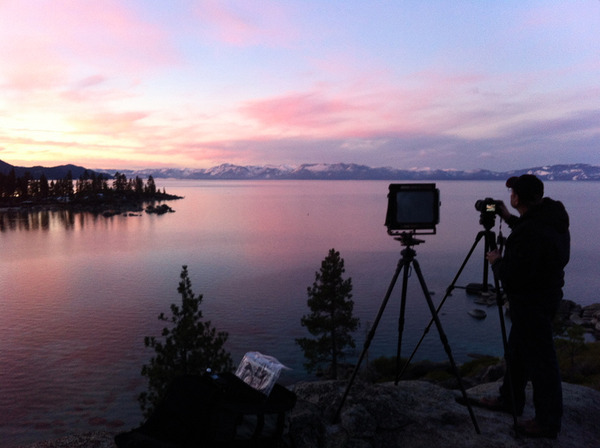
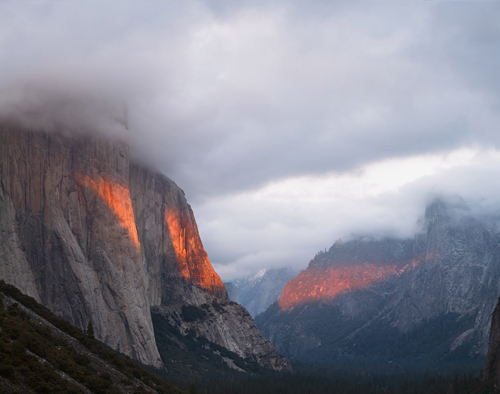
NEW- February 22-24 Yosemite Semi-Private Tour – SOLD OUT
I will only take 4 people, offering us amazing camaraderie and teamwork. The intention is to enable you to experience the type of photography experience often reserved for my close friends and fellow pros. This will be a budget friendly trip with total immersion into the photographic experience, day and night. We will share in decision making, scouting and shooting. Weather, as always, dictates our shooting choices. This is the right time of year to capture the famous “fire fall” (conditions permitting). While I will be shooting with you, my main focus is your learning experience! You come first. I get us there, get us set up and answer EVERY question. I am working for you:)
Call me for specifics and to reserve your spot 530-545-2896.
Cost: only $479
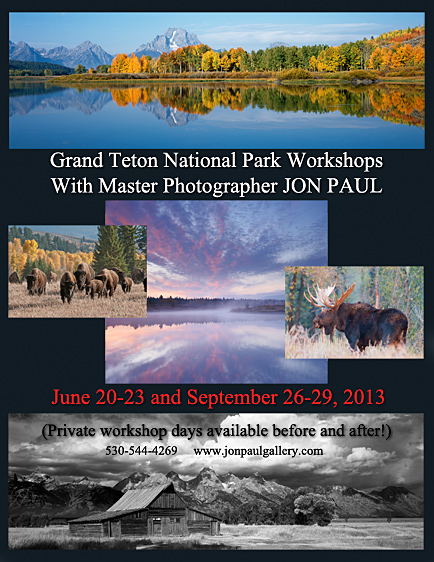
Grand Teton National Park Workshop / Tour Dates Set! (see flyer below)
Grand Tetons in the Spring, 2013:
June 20-23:
This will be a four day adventure focussing on iconic Teton landscape images, as well as wildlife photography (baby critters will be out and about). Along with putting us in the right place at the right time to capture our dream photos, I will be teaching about composition, exposure, light, perspective and proper technique. 100% of our time will be spent in the field, where we will learn while doing. While our days are long and tiring, they are also extremely rewarding both photographically and personally. Comeraderie is a huge part of our experience. We will have a great time in a world class wilderness environment and come away better photographers for it. This will be limited to a small number of participants so everyone has all the personal attention required to get the most out of the experience. This is not a physically demanding tour, but participants should be able to walk on uneven ground. You will be expected to rise early to start the day, and be considerate to the groups time requirements in order to ensure that we can meet our “magic light” timelines! Please call to discuss any details that may help you make your decision.
Dates: June 20-23, 2013
Cost: $975
530-544-4269
NEW Private Workshop Days available in both Grand Teton and Yellowstone!
I have added the option of private, one-on-one workshops, both before and after the official Grand Teton dates. I will offer these private sessions at the same price as my local private sessions!
Call to arrange your custom dates 530-545-2896.
Cost: only $500/day
I have added the option of private, one-on-one workshops, both before and after the official Grand Teton dates. I will offer these private sessions at the same price as my local private sessions!
Call to arrange your custom dates 530-545-2896.
Cost: only $500/day
Winter in Lake Tahoe
I have left a large number of dates open and available for private one-on-one or small group workshops / tours here in Lake Tahoe (or wherever you would like). This is a beautiful time of year to photograph Lake Tahoe, aspen groves, rivers, waterfalls, ice patterns, mist, black & white, sunrises and sunsets. The sun is low in the sky, providing soft light and long shadows. We can generally shoot a little later in the morning, and earlier in the evening. Snow and ice provide a new look to the land, and very different opportunities for familiar subjects. Composition and metering, along with managing the cold and snowy conditions, however, become unfamiliar. Join me in the field and allow me to share my experience with you. Let’s create some unique images, while I help you gain confidence in the snow covered photographic world!
Cost: $750/day only $500/day

Spring in Lake Tahoe
Dates will be announced shortly! Private workshops / tours are still available!
This is the most popular time of year to photograph Lake Tahoe! A majority of my signature Lake Tahoe images were composed at this time of year.
Often the lake is calm, providing iconic clear water images, along with beautiful sunrise and sunset reflections. Waterfalls are rushing with snow melt, rivers are full, and there are still very few visitors. We have the place to ourselves! Honestly, this is the stuff photographers dreams are made of:) Please join me, as I share the most outstanding locations to photograph in this region, along with my knowledge and understanding of the art of landscape and wildlife photography. As one of the few successful gallery photographers in the country, I have a different approach to this art. I am not attempting to create huge volumes of work to fill magazine space. Nor am I attempting to produce “digital art” from mediocre images. I will share with you the simple steps and tools necessary to capture “the fine art of nature”, eliminating the intimidation factor of the digital world. All questions are answered, as we learn by doing. Let’s look through the lens together, create amazing images, and learn to become more successful photographers in the field.

Posted in California, death valley, digital photography, Eastern Sierras, fine art, Grand Tetons, impressionist, Jackson Hole, jon paul gallery, Landscape, large format, light painting, Moose, Mountains, National Parks, oxbow bend, Panorama, photo techniques, Photo Tip, photo tour, photo workshop, Salt Flat, spring, Sunrise, Sunset, Tutorial, Uncategorized, western, wildlife photography, Winter Photography, Wyoming, Yellowstone, Yosemite Also tagged art, black and white, clouds, death valley, digital, Eastern Sierras, Grand Tetons, impressionist, Jackson Hole, jon paul gallery, Lake Tahoe, Landscape, large format landscape photograph, Mountain Photography, moving water, National Parks, Panorama, philosophy, Photo Seminar, photo tips, photo tour, photo workshop, Photography, reflection, spring, Sunrise, Sunset, teaching, technique, Tutorial, western, wildlife photography, Winter Photography, Yosemite Leave a comment
When the Magic Happens!

Steaming Tree, Light Rays & Reflections
When the magic happens, all is right in the world. This was one of those moments. After several days of rain, and a relatively cold night, the rising sun heated the dark, wet tree and created steam. A scene I have walked by numerous times was transformed into a mystical wonderland. It was thrilling to experience. As the steam filled the air, obscuring the forest beyond, and filtering the rays of sun breaking through the branches, I immersed myself in the experience. This isn’t a mere photograph. This is a translation of what I feel when Mother Nature is kind enough to let the magic happen.
I chose to shoot black and white film on my 4×5 field camera, as this image was all about mood. The tones of black, white and grey were necessary to translate the emotions of the light show, narrowing the scene down to light, dark and form. i love making these artistic choices in the field, as opposed to shooting haphazardly, and hoping to fix it in a computer later. This is the only way to translate the feelings we experience in nature with our art. For me, the art is the experience. My photography is the simple artistic representation.
Photo Tip:
This is a classic example of using the Zone System in order to capture a huge exposure range in one sheet of film. I metered on the dark shadow on the tree, then underexposed 2 1/2 stops. This rendered the tree relatively black, with a touch of detail remaining in the shadows. The areas of bright light (lit grass & backlit fog) metered 7 stops brighter than the shadow. To remedy this, I used a N-2 processing time on the film (under processed 2 stops) in order to narrow the range between shadow and highlight to 5 stops. Using these tactics, I was able to create a negative that rendered detail in both shadow and highlight areas, while keeping a full range of contrast. The craft of large format film photography is a real joy to work with, and when done well, renders amazing results!
Equipment used:
Canham 5×7 metal Field Camera, 4×5 Reducing Back, Rodenstock Sironar-S 150mm lens, Really Right Stuff BH-55 Ball Head, Gitzo Carbon Tripod, Kodak T-Max 100 Black and White Film, Ilford ID-11 Developer.
Posted in 4x5 film, Back Light, black and white, California, fine art, fog, forest, jon paul gallery, Lake Tahoe, Landscape, large format, photo techniques, Photo Tip, Pine Forest, reflection, Sunrise, Tutorial Also tagged art, black and white, fog, forest, jon paul gallery, Lake Tahoe, Landscape, large format landscape photograph, Mountain Photography, moving water, Photo Seminar, photo tips, Photography, pine trees, reflection, steam, Sunrise, technique, Tutorial Leave a comment
Let Emotions Lead You to Great Images
-

"Winter Aspens and Pine"
This image is the product of emotions, a true connection with the natural landscape and patience. I had passed this location numerous times over the years in search of wildlife, but never “saw an image”. One Spring morning, while hiking through, this section of trees pulled me in. I didn’t see an image that day, but I didn’t ignore what I felt. I returned to this spot every season for several years. The feeling remained, but the conditions didn’t quite fit my emotions. Fall colors, new Spring green, snow covered. They all lacked…something. I stayed true to the emotions that kept bringing me back. Finally, it happened! This particular morning had just the right even light and brightness. It was snowing lightly, the wispy dormant aspens had a delicate, wispy lightness to them. The pines in the background showed there subtle detail and subdued, yet rich color, which set off every nuance of the aspen branches. This was the moment where my emotion matched the visual moment! The art happened. I was able to “bring the fine art of nature home”.
This process of “bringing the fine art of nature home” is something I have been basing my art around for years. It is also what I base my photo tour concepts on. I don’t want to create massive volumes of pictures. I want to do justice to those moment in time that make me feel…right. And I want to share that with the world in the finest print possible. That is my passion. For this image, I felt it was imperative to choose my medium carefully. With the fine detail and subtlety in this composition, I chose to use my 8×10 inch film camera, which I have adapted to also take 4×10 inch panoramic format images. This huge format not only records amazing detail, but also forces me to take full responsibility for every aspect of the final exposure and image. Along with it’s cumbersome nature and great cost to shoot, I find that I must shoot very deliberately and consciously to make sure my exposure and composition match my emotional vision. This has helped me grow as an artist, and enables me to express the emotion I feel in the natural world through my fine art prints.
Photo Tip:
Stop thinking technically (about all the functions on the camera and all of your software), and focus on that which brought you to the outdoors to begin with. Yes, we have to understand enough about exposure, light and composition to capture an image, but we need to have a feeling about the subject to compose a piece of art! Trust yourself and the emotions that draw you to a particular image, and use the technical aspects of photography as the final part of capture. Immerse yourself in your natural surrounding, enjoy the experience and let your art go beyond a two dimensional technical capture.
Equipment:
Canham 8×10 Metal Field Camera adapted to also Shoot 4×10 Panorama, Rodenstock 360 mm APO Sironar-S lens, Really Right Stuff BH-55 Ball Head, Gitzo Carbon Tripod, Fuji Provia RDP III 100 speed Transparency Film.
Posted in 4x10 film, 8x10 film, aspen grove, California, Fallen Leaf Lake, fine art, forest, jon paul gallery, Landscape, large format, Mountains, Panorama, panorama film, photo techniques, Photo Tip, Pine Forest, Snow Photography, Tutorial Also tagged 4x10 film, 8x10 film, art, aspen, forest, jon paul gallery, Lake Tahoe, Landscape, large format landscape photograph, Mountain Photography, Panorama, philosophy, Photo Seminar, photo tips, Photography, pine trees, teaching, technique, trees, Tutorial, Winter Photography Leave a comment
Anticipation is a key to capturing great wildlife moments

Coyote Mousing
Watching the amazing things wild animals do in their daily lives is often amusing and exciting to experience. Hey, that’s why we invest the time in the field. However, understanding their behavior, understanding what we may expect, and carefully observing the details enables us to be prepared and anticipate when that magic moment might occur. This coyote picture is a great example of success through anticipation.
I occasionally visit this meadow near where I live in lake Tahoe in search of wildlife (I anticipate their being here). When I saw this coyote slowly zigzagging through the meadow grass, I knew he was hunting for field mice, voles and ground squirrels. I quietly picked a spot slightly ahead of him, in the direction he was meandering, and set myself up in the treeline for cover. Then, I observed.
When he heard movement in the grass he froze, his ears swung to the front and his head pointed directly at the prospective meal. Importantly, I noticed that he would crouch, putting all of his weight on his hind legs, prior to bounding into the air toward his prey. Now, whenever he would stop, I would set my focus, then move his current position to the side of the frame, anticipating that he would leap into the scene. This gave me a composition that was natural for the eye to observe.
I also metered the scene and set my exposure time appropriately to freeze the impending burst of motion.
Anticipation enabled me to capture the “decisive moment” that I am sharing with you now. It also enabled me to relax and enjoy the show, as I was confident in being prepared for the shot. I was able to both shoot the action and enjoy the natural beauty that brought me to nature photography in the first place!
Photo Tip:
Study, research and plan in anticipation of the animals you are likely to see in the location you plan to visit. Prepare your gear with appropriate lens choice, tripod, and exposure settings in anticipation of what you may see in that setting. When you do find the animal(s) you hope to photograph, observe every aspect of their behavior in anticipation of that decisive moment that will make the shot you dreamed of.
Equipment used:
Nikon D300, Nikon 200-400 F4 AF VR, Nikon 1.4x teleconverter, Really Right Stuff BH-55 Ball Head, Gitzo 1325 Carbon Fiber Tripod.
Posted in aspen grove, California, coyote, digital photography, Fallen Leaf Lake, forest, jon paul gallery, Lake Tahoe, Lake Tahoe Wildlife, mousing, nikon, photo techniques, Photo Tip, teleconverter, telephoto lens, Tutorial, wildlife photography Also tagged anticipation, art, aspen, coyote, digital, forest, hunting, jon paul gallery, Lake Tahoe, meadow, mousing, Photo Seminar, photo tips, Photography, technique, Tutorial, wildlife photography Leave a comment
Look Beyond What You Expect To See!

Salt Polygons, Storm Clouds & Magic Light
With my time being valuable, and with experience on my side, many of my strongest landscape images are born of research, planning and multiple visits to a single location. That said, there are quite a few gems that have come from being open to whatever Mother Nature offers up. The image above is a great example of this scenario. I had waited for days while Mother Nature handed up flat grey sunrises and sunsets. On this particular morning, I was rewarded with exactly what I had hoped for. Just 20 minutes before this image was taken, I was treated to the pastel pink and orange sky I had hoped for, adding the perfect backdrop to my strong salt polygon foreground. It was quite tempting, after achieving the “goal image”, to pack up and head back to camp to rest. However, I was willing to receive multiple gifts, if Mother Nature wanted to be generous.
I was intrigued by the warm morning light on the salt polygons and the distant mountain line, contrasted against the dark clouds of the approaching storm. I put my 8×10 away, and set up my 5×7 field camera with a 6×17 cm panoramic film back. The panoramic format accentuated the long lines of the mountain range, dark sky, sandy brown salt and white salt in the foreground. I also feel that the panoramic format accentuates the feeling of vastness I was struck by, while eliminating too much empty sky or overdone foreground. The drama and mood of this image conveys the desolate beauty I experienced in this unique location. If I had closed my mind to anything other than the image I had pre-visualized, I would have missed an amazing opportunity. Remember, it is nice to compose an image we have created in our minds eye, but we don’t want to miss that hidden gem (or the experience that comes along with discovering it!).
Photo Tip:
This one is basic, but shouldn’t be overlooked. Always stay open and receptive to whatever Mother Nature may offer you. I actually find that this is often an issue for more experienced photographers. As we gain experience, we often become set in our ways, focused on “the job” of creating a perfect image, or just plain lazy. I have seen people discover magic light, learn how to plan around it, become adept at planning the ideal shot (all good things), and then forget about the experience of being in nature. Light changes, occurs in different ways and transforms a landscape. While the perfectly planned shot is great to achieve, we should stay open to something different (and perhaps better) that shows itself to us. If we go beyond what we expect, and tap into the emotion and intuition that made us want to preserve these natural moments through photography, we can maintain our love for the natural experience and create images that are truly moving.
This one is basic, but shouldn’t be overlooked. Always stay open and receptive to whatever Mother Nature may offer you. I actually find that this is often an issue for more experienced photographers. As we gain experience, we often become set in our ways, focused on “the job” of creating a perfect image, or just plain lazy. I have seen people discover magic light, learn how to plan around it, become adept at planning the ideal shot (all good things), and then forget about the experience of being in nature. Light changes, occurs in different ways and transforms a landscape. While the perfectly planned shot is great to achieve, we should stay open to something different (and perhaps better) that shows itself to us. If we go beyond what we expect, and tap into the emotion and intuition that made us want to preserve these natural moments through photography, we can maintain our love for the natural experience and create images that are truly moving.
Equipment:
Canham 5×7 Metal Field Camera, Canham 6×17 cm panoramic film back, Caltar (Rodenstock) 210mm lens, Really Right Stuff BH-55 Ball Head, Gitzo Carbon Tripod, Fuji Provia RDPIII 100 Transparency Film.
Canham 5×7 Metal Field Camera, Canham 6×17 cm panoramic film back, Caltar (Rodenstock) 210mm lens, Really Right Stuff BH-55 Ball Head, Gitzo Carbon Tripod, Fuji Provia RDPIII 100 Transparency Film.
Posted in 617cm film, 8x10 film, California, death valley, desert photography, digital photography, jon paul gallery, Landscape, large format, Mountains, National Parks, Panorama, panorama film, photo techniques, Photo Tip, Salt Flat, Sunrise, Uncategorized, western Also tagged 8x10 film, art, death valley, jon paul gallery, Landscape, large format landscape photograph, National Parks, Panorama, Photo Seminar, photo tips, Photography, Salt Flats, teaching, technique, Tutorial 1 Comment
Making Our Artistic Choices at Capture, Not as an Afterthought

Joshua Trees & The High Sierras
After a few days creating images in Death Valley National Park, my friend (and fellow photographer) Christian Fleury, and I ventured out of the park and into the desert for one final photographic opportunity. I was enamored with the starkness of the desert and wanted to share the feeling of vastness. I knew black and white film was a natural choice for the mood I was trying to convey, and the amazing cloud display begged for a this classic look. I chose my 6x17cm film format for the wide view that accentuated the expanse of the desert. The widely spread Joshua trees growing in the sand redefined the traditional vision of “forest”. The wispy clouds danced overhead, celebrating the openness of this wild place. The mighty Sierra Nevada Mountains in the distance pulled the scene together. I truly felt the mood of this location, and reveled in the artistic process of choosing how to visually interpret, compose and capture this image. If I had taken a modern approach of shooting hundreds of frames in color, weeding through them on the computer, and finally deciding “how the image should look”, I would have lost the mood and message I wanted to convey. As an artist in nature, I enjoy taking the responsibility of choosing my final vision while in the field. It is very gratifying to have that vision come to fruition through that initial emotion, successful choices, and an individual capture. That is the art I enjoy. Enjoy the View!
Photo Tip:
Slow down and trust your feelings. In a fast digital world, it is easy to get caught up in the whole mindset of not wanting to miss anything. Note that this is a human nature & societal problem, not a digital problem. The issue becomes a lack of focus on what is moving us and drawing us to the subject we want to photograph. In a familiar location near home, try the old method of giving yourself just one sheet of film (or one last spot on the memory card:) ). Observe what you are drawn to and take the time to conceive of the expected light, choose the composition carefully, clean up those edges, refine the focal length, pick the optimal camera position, carefully select the exposure, use solid technique with your tripod, cable release, etc. Make this one exposure important relative to what it makes you feel, and what it might communicate to a viewer. Enjoy the process, and take control of your art. Don’t go home with hundreds, or even thousands of images wondering if you may hove gotten anything. This practice will build your confidence in your skills, refine your artistic eye, and enable you to create a higher percentage of “successful images” in the future.
Equipment used:
Canham 5×7 metal field camera, Canham 6x17cm roll film back, Caltar II-n (Rodenstock) 90mm lens, Gitzo 1325 Carbon Tripod, Really Right Stuff BH-55 Ball Head, Acros 100 black and white film, Singh Ray LB Warming Polarizer, Red Filter.
Posted in 617cm film, black and white, California, death valley, desert photography, digital photography, Eastern Sierras, jon paul gallery, joshua tree, Landscape, large format, Mountains, National Parks, Panorama, panorama film, photo techniques, Photo Tip, Uncategorized, western Also tagged art, black and white, clouds, death valley, Desert, digital, Eastern Sierras, film photography, filters, jon paul gallery, joshua tree, Lake Tahoe, Landscape, large format landscape photograph, Lone Pine, Mountain Photography, National Parks, Panorama, philosophy, Photo Seminar, photo tips, Photography, teaching, technique, Tutorial, U2, western Leave a comment
Follow Me


 Subscribe in a reader
Follow Us!