-
 Subscribe in a reader
Tag Archives: black and white
Grand Tetons Workshop / Tour Offerings for 2013

Oxbow Bend Fall Reflection Panorama
(See more images an testimonials below!)
Grand Tetons in the Spring & Fall, 2013: June 20-23 and September 26-29
This will be a four day adventure focussing on iconic Teton landscape images, as well as wildlife photography (baby critters will be out and about). Along with putting us in the right place at the right time to capture our dream photos, I will be teaching about composition, exposure, light, perspective and proper technique. 100% of our time will be spent in the field, where we will learn while doing. While our days are long and tiring, they are also extremely rewarding both photographically and personally. Comeraderie is a huge part of our experience. We will have a great time in a world class wilderness environment and come away better photographers for it. This will be limited to a small number of participants so everyone has all the personal attention required to get the most out of the experience. This is not a physically demanding tour, but participants should be able to walk on uneven ground with distances ranging from 1/2 to 2 miles. You will be expected to rise early to start the day, and be considerate to the groups time requirements in order to ensure that we can meet our “magic light” timelines!
NEW Private Workshop Days available in both Grand Teton and Yellowstone!
I have added the option of private, one-on-one workshops, both before and after the official Grand Teton dates. I will offer these private sessions at the same price as my local private sessions! Call to arrange your custom dates 530-545-2896. Cost: only $500/day

Jon Paul with his 8x10 film camera near his home in Lake Tahoe
Jon Paul’s Approach to Workshops / Tours?
“Bringing the Fine Art of Nature Home”
Many participants come to me believing that all of the functions on their digital camera, their Raw converter, HDR software and editing software are photography. They are quite overwhelmed by “everything they have to learn”! I have created a methodology that eliminates the intimidation factor and brings you back to the reasons you wanted to do photography in the outdoors to begin with:)
As my catch phrase, “Bringing the Fine Art of Nature Home”, intimates, we look through the lens together and create a simple procedure, consisting of just a few steps, that enable you to enjoy photography and increase your success rate. This process has been a great success for participants ranging from relative beginners to professionals. From scouting and planning to composition, solid technique and filter use to light and exposure, and using your “digital cheat sheet”, we will learn while doing!
Each one of us learns differently, has a different ability level, and wants to do photography for their own reasons. I work with each person individually every day, at each location. I address each participants needs one-on-one, along with sharing details with the group as a whole. The natural world is our classroom, and I will help you reach your personal photographic goals while also creating a fine portfolio of images in this amazing location!
The combination of my teaching methodology, a world class location, diverse wildlife, small group size and and enjoyable camaraderie make this an experience of a lifetime! I look forward to sharing this time with you.
Please call to discuss any details that may help you make your decision.
Dates: June 20-23, 2013
Cost: $975
530-544-4269

Schwabacher's Beaver Pond Reflection
“Jon, I would just like to thank you for the amazing workshop in the Grand Teton NP this fall. It way exceeded my expectations as a professional photographer and you have all the social skills, technical talent, great sense of humor and the “7th” sense to find the coolest spots and make a special visit even more special! You have to use your amazing talent and lead many more. I would highly recommend you as a workshop LEADER in the photo community ! ”
Marcell Puzsar Tetons 2012

Grand Tetons and Horses Black & White Panorama
“I really would like to encourage those that interested in photography (at all levels) to sign up with Jon. I recently completed a photography workshop with Jon and learned so much within a short time. Jon has an incredible eye for detail and is so willing to share his ideas and knowledge. With his encouragement and enthusiasm, you will not only leave with a better knowledge of photography but also, take a little of piece Tahoe memories with you in your camera!” Ju Shen, Singapore 2012

Bull Moose in Evening Light
“I want to thank you for an outstanding workshop in the Grand Tetons. The camaraderie and team interaction was awesome. I think it is a tribute to you that a group of total strangers could come together and feel as if they knew each other for years.The photography experience was one of the best I have ever had. Your ability to blend both the technical and creative is outstanding. I learned as much about the art as the photographic skills.The selection of the locations and your knowledge of how the weather and conditions would play out was both impressive and a critical factor in creating a great experience. Thanks for an outstanding workshop.”
Mike Miller Grand Tetons 2012

Sunset Reflection, the Oxbow
“I took part in the Tetons fall workshop offered by Jon Paul and couldn’t be more happy about that. Besides being a master photographer Jon is also a great teacher and a super friendly person to be around. The workshop was well structured yet flexible, the scenery was stunning and the atmosphere of camaraderie provided an additional icing on the cake! Jon was very personable and freely offered his advice making sure all of the participants were progressing with their skills and vision.I’d highly recommend his workshops to anyone interested in taking their photography to the next level.”
Anna K. Grand Tetons 2012

Bison & Snowfall, Grand Teton

See Grand Teton National Park Thru the Eyes of a World Renowned Gallery Photographer!
www.jonpaulgallery.com 530-544-4269 http://www.facebook.com/JonPaulGalleryLakeTahoe
Posted in digital photography, Grand Tetons, jon paul gallery, National Parks, photo tour, photo workshop, Uncategorized, wildlife photography Also tagged Barn, Bison, Elk, Fall color, Grand Tetons, Jackson Hole, jon paul gallery, Moose, National Parks, oxbow bend, Panorama, Photo Seminar, Schwabacher's Landing, technique, Tutorial, western, wildlife photography, Wyoming Leave a comment
Seeing an Icon Differently (Firefall in B & W)

Firefall V.S. Silver Light
The Story:
The digital world is affecting landscape photography in many ways. Advances in digital equipment have made photography accessible and enjoyable for millions of people that never would have picked up a film camera. Digital communication has made many beautiful places “known” to the masses. This combination of factors is encouraging large numbers of people to make pilgrimages to these beautiful iconic spots with the purpose of re-creating images they have seen in magazines and on the web. While these locations have become icons for a reason (beautiful is beautiful!), there comes a time when they have been overdone. We can get so caught up in shooting a scene the way we expect to see it, that we often miss, or even consciously pass up, spectacular alternatives that Mother Nature presents to us in the exact same location. We shut down to the many possibilities that create real magic and excitement in nature.
The above images are perfect examples of the iconic expectation v.s. an unexpected possibility. The image on the left, known as the “Fire Fall” is the expected image. During a brief window of only two weeks each year, the sun sets at just the right angle to illuminate Horsetail Falls, in Yosemite National Park, with beautiful sunset color as the cliffs on either side of the falls become shaded. While this image would have benefitted greatly from heavier water flow, it is still a pleasing representation of an iconic event. I like the image and will make it available to my collectors.
Now, let’s consider the black and white image on the right. I created this image while most other people were merely viewing the scene waiting for the expected “Fire Fall”. I noticed that the evening light, as it narrowed toward the middle of the cliff, gleamed with a magical silver light, creating what appeared to be an elongated heart around the waterfall. This light created a monotone scene, contrasting strongly against the shaded areas of the cliff face. Importantly, I felt this image, and envisioned it in black and white. Like most successful images, this was not an afterthought. I was emotionally moved to create this composition. There was purpose to my shooting (although unplanned). I had to do this! People kept asking what I was doing, and even after I shared what I was envisioning, they were quite content to wait for the same image the crowd was there to see. Fair enough. I now have an image that I am extremely moved by, and which is vastly more dramatic than the light show we had expected. Being open enough to allow your emotions to move you toward a vision is where “the fine art of nature” elevates photography to an art form.
The lesson here is, while it is certainly fine to let the possibility of an iconic image motivate you to visit a particular location, stay open to all possibilities that may present themselves. Often, the unexpected image is the one you will be most proud of. Don’t force the issue for the sake of being different, let it happen naturally. As you build experience, your personal style will develop. Be your own artist, not a copy of someone who has probably copied someone before them.
Enjoy the View!
Photo Tip:
Tip number one, as mentioned above, use available knowledge of iconic locations and conditions to get yourself to the “right spots at the right time”. THEN, stay very open for new and different photographic possibilities. While other people lay around during the day (usually working on the computer trying to make a mediocre shot “good”), get out and scout. I like to fill every available minute on my photo trips with “being out”. Drive the area, look at maps, hike to spots that may be interesting, go for a trail run or bike ride, etc. Figure out your own vision for the area and plan the right time to return to that spot. I like to use the outdoors as my gym. There have been many times when I have done a trail run or hike and come across a new and exciting subject. This shouldn’t feel “hard”. Stay open and see if something presents itself to you. It is very gratifying to “feel” an image. That is “the fine art of nature”. Compare that to how you feel when asking someone in the lineup of photographers, “is that it?”. (Personally, physical exertion opens my mind and spirit to what is around me in a very different and positive way, truly opening my eyes to what I feel!) As the example images above show, sometimes staying open and feeling your own vision simply entails seeing a version of the iconic shot in different light, or with different eyes.
Don’t let yourself get caught up in a technical mindset. Their are so many possibilities with digital photography that many people get caught up in the “engineering”. A majority of people that come to my workshops/tours are overwhelmed with all of the functions on their camera, their raw converter, Lightroom, photoShop, HDR software, etc. (This includes aspiring and current professionals!) They lose sight of the joy of being outdoors (which is why they wanted to take photos to begin with!) and composing pleasing images. The most talented and successful photographers in the world use the most simple of precesses. Research beforehand, scout, observe, shoot in the right light relative to your subject and your vision, compose well, expose properly. The digital darkroom is really a tool to simply fine tune a well executed image. Many people are confusing digital art with photography. Please consider joining me on a group or private workshop/tour. I’d be happy to help you simplify the photographic process, making it both more successful and more enjoyable!
Equipment Used:
Nikon D300 DSLR, Nikon 200-400 F4 AF VR, Gitzo 1325 Carbon Tripod, Really Right Stuff BH-55 Ball Head, Cable Release. PhotoShop CS4 used for stitching and B & W conversion.
Posted in black and white, digital photography, fire fall, jon paul gallery, National Parks, photo techniques, Yosemite Also tagged California, fire fall, Horsetail Falls, jon paul gallery, large format landscape photograph, National Parks, Photo Seminar, photo tips, photography workshop tour, Sunset, Yosemite Leave a comment
I Felt the Image, but had to Wait for Mother Nature to Paint it.

Sugar Pines in Fog, B & W Panorama
As is often the case with special photographs, I felt that an image was here, but it took several years to present itself to me. Sugar Pine trees are unique, majestic beings made even more impressive by their backdrop of Lake Tahoe. The rich brown bark and green needles are strongly set off by the azure blue waters of Lake Tahoe in the background. While that scene is wonderful, and beautiful to experience, I had felt the possibility of a more dramatic image that alluded to the age and mystery of this forest scene. As fog is rare in the mountains around Lake Tahoe, when it arrives, I put everything else on hold and venture into the shrouded world. On this particular morning, I knew exactly where I wanted to go. The vision was pulling me. Fortunately, the fog was dense enough to obscure all but the silhouettes of the Sugar Pines. I chose the panoramic format, focussing on the tops of the trees, which had more dramatic and defined silhouettes. The panorama also offered a greater sense of depth, showing trees both close to the camera, and at incrementally greater distances from the camera, disappearing mysteriously into the fog. I also chose to produce a black and white image, as Mother Nature had presented the scene largely in that manner. The little bit of color that would have been rendered would have merely “muddied” the scene. The strength of this image is in its simplicity. I had an emotional response to this composition, but had to exercise a bit of patience until Mother Nature was ready to paint the scene for me. It was well worth the wait!
Photo Tip:
Shooting in fog can be difficult. To begin with, your light meter will render the white fog as a neutral grey. I find that an exposure compensation of +1 (overexpose 1 stop from meter reading) adds the brightness I want in the scene without “blowing out” the highlights. I am conservative and don’t like to risk losing details. I can then compensate another 1/2 to 1 full stop in processing if I choose. Furthermore, we have to choose whether we want the “solid” subject matter (in this case the trees) to be strong and dark, or soft and relatively light. As I am a large format film shooter, I spot meter each area of the scene and expose for a relatively neutral outcome, which I can fine tune after the fact. If you are shooting digital, as most of my workshop participants do, you can use your histogram as a guide. In this instance, I would definitely “expose to the right” of the histogram, keeping the fog white and the trees light. Even with the white fog, however, I would try not to clip the highlights. Again, I am conservative and like to leave myself as much information in my file / film as possible so I can use my artistic judgement when fine tuning the final print.
If we make a good exposure (I find one exposure to be plenty), we can fine tune our final image with a couple of simple adjustment layers. It all comes down to an understanding of the basics of exposure and metering. Simple, simple, simple.
NOTE: Feel free to contact me for a private or group workshop. I specialize in keeping it simple, eliminating the intimidation factor of the digital world, and bringing success and joy back into outdoor photography.
Equipment:
Canham 5×7 Metal Field Camera, Canham 6×17 cm roll film back, Fuji RDPIII 100 film, Rodenstock APO Sironar -S 150mm lens, Gitzo 1325 Carbon Tripod, Really Right Stuff BH-55 Ball Head
Posted in 4x10 film, 617cm film, black and white, California, digital photography, exposure, fine art, fog, forest, histogram, jon paul gallery, Lake Tahoe, Landscape, large format, Panorama, panorama film, photo techniques, Photo Tip, photo workshop, Tutorial, Uncategorized Also tagged California, digital, exposure, fog, forest, histogram, jon paul gallery, Lake Tahoe, Landscape, large format landscape photograph, Mountain Photography, Panorama, Photo Seminar, photo tips, Photography, pine trees, sugar pine, technique, trees, Tutorial Leave a comment
New Workshops / Tours Update! (dates approaching)
Field Photography Workshops / Tours
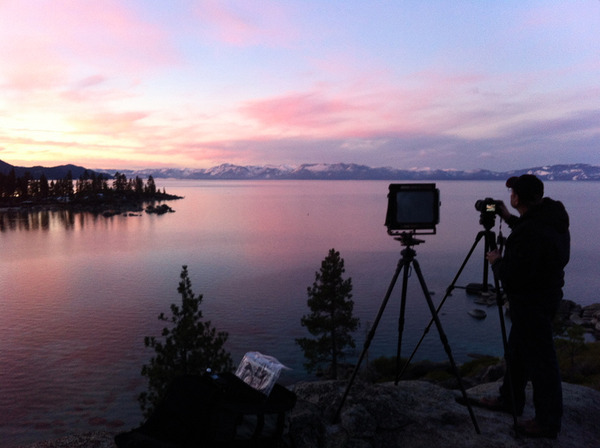
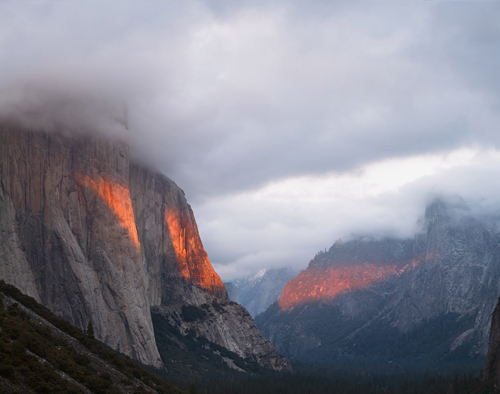
NEW- February 22-24 Yosemite Semi-Private Tour – SOLD OUT
I will only take 4 people, offering us amazing camaraderie and teamwork. The intention is to enable you to experience the type of photography experience often reserved for my close friends and fellow pros. This will be a budget friendly trip with total immersion into the photographic experience, day and night. We will share in decision making, scouting and shooting. Weather, as always, dictates our shooting choices. This is the right time of year to capture the famous “fire fall” (conditions permitting). While I will be shooting with you, my main focus is your learning experience! You come first. I get us there, get us set up and answer EVERY question. I am working for you:)
Call me for specifics and to reserve your spot 530-545-2896.
Cost: only $479
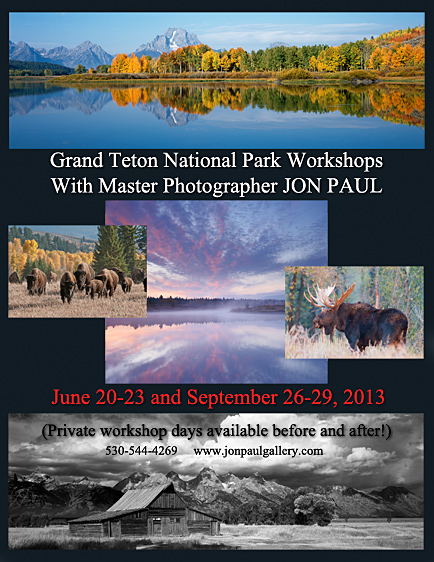
Grand Teton National Park Workshop / Tour Dates Set! (see flyer below)
Grand Tetons in the Spring, 2013:
June 20-23:
This will be a four day adventure focussing on iconic Teton landscape images, as well as wildlife photography (baby critters will be out and about). Along with putting us in the right place at the right time to capture our dream photos, I will be teaching about composition, exposure, light, perspective and proper technique. 100% of our time will be spent in the field, where we will learn while doing. While our days are long and tiring, they are also extremely rewarding both photographically and personally. Comeraderie is a huge part of our experience. We will have a great time in a world class wilderness environment and come away better photographers for it. This will be limited to a small number of participants so everyone has all the personal attention required to get the most out of the experience. This is not a physically demanding tour, but participants should be able to walk on uneven ground. You will be expected to rise early to start the day, and be considerate to the groups time requirements in order to ensure that we can meet our “magic light” timelines! Please call to discuss any details that may help you make your decision.
Dates: June 20-23, 2013
Cost: $975
530-544-4269
NEW Private Workshop Days available in both Grand Teton and Yellowstone!
I have added the option of private, one-on-one workshops, both before and after the official Grand Teton dates. I will offer these private sessions at the same price as my local private sessions!
Call to arrange your custom dates 530-545-2896.
Cost: only $500/day
I have added the option of private, one-on-one workshops, both before and after the official Grand Teton dates. I will offer these private sessions at the same price as my local private sessions!
Call to arrange your custom dates 530-545-2896.
Cost: only $500/day
Winter in Lake Tahoe
I have left a large number of dates open and available for private one-on-one or small group workshops / tours here in Lake Tahoe (or wherever you would like). This is a beautiful time of year to photograph Lake Tahoe, aspen groves, rivers, waterfalls, ice patterns, mist, black & white, sunrises and sunsets. The sun is low in the sky, providing soft light and long shadows. We can generally shoot a little later in the morning, and earlier in the evening. Snow and ice provide a new look to the land, and very different opportunities for familiar subjects. Composition and metering, along with managing the cold and snowy conditions, however, become unfamiliar. Join me in the field and allow me to share my experience with you. Let’s create some unique images, while I help you gain confidence in the snow covered photographic world!
Cost: $750/day only $500/day

Spring in Lake Tahoe
Dates will be announced shortly! Private workshops / tours are still available!
This is the most popular time of year to photograph Lake Tahoe! A majority of my signature Lake Tahoe images were composed at this time of year.
Often the lake is calm, providing iconic clear water images, along with beautiful sunrise and sunset reflections. Waterfalls are rushing with snow melt, rivers are full, and there are still very few visitors. We have the place to ourselves! Honestly, this is the stuff photographers dreams are made of:) Please join me, as I share the most outstanding locations to photograph in this region, along with my knowledge and understanding of the art of landscape and wildlife photography. As one of the few successful gallery photographers in the country, I have a different approach to this art. I am not attempting to create huge volumes of work to fill magazine space. Nor am I attempting to produce “digital art” from mediocre images. I will share with you the simple steps and tools necessary to capture “the fine art of nature”, eliminating the intimidation factor of the digital world. All questions are answered, as we learn by doing. Let’s look through the lens together, create amazing images, and learn to become more successful photographers in the field.

Posted in California, death valley, digital photography, Eastern Sierras, fine art, Grand Tetons, impressionist, Jackson Hole, jon paul gallery, Landscape, large format, light painting, Moose, Mountains, National Parks, oxbow bend, Panorama, photo techniques, Photo Tip, photo tour, photo workshop, Salt Flat, spring, Sunrise, Sunset, Tutorial, Uncategorized, western, wildlife photography, Winter Photography, Wyoming, Yellowstone, Yosemite Also tagged art, California, clouds, death valley, digital, Eastern Sierras, Grand Tetons, impressionist, Jackson Hole, jon paul gallery, Lake Tahoe, Landscape, large format landscape photograph, Mountain Photography, moving water, National Parks, Panorama, philosophy, Photo Seminar, photo tips, photo tour, photo workshop, Photography, reflection, spring, Sunrise, Sunset, teaching, technique, Tutorial, western, wildlife photography, Winter Photography, Yosemite Leave a comment
When the Magic Happens!

Steaming Tree, Light Rays & Reflections
When the magic happens, all is right in the world. This was one of those moments. After several days of rain, and a relatively cold night, the rising sun heated the dark, wet tree and created steam. A scene I have walked by numerous times was transformed into a mystical wonderland. It was thrilling to experience. As the steam filled the air, obscuring the forest beyond, and filtering the rays of sun breaking through the branches, I immersed myself in the experience. This isn’t a mere photograph. This is a translation of what I feel when Mother Nature is kind enough to let the magic happen.
I chose to shoot black and white film on my 4×5 field camera, as this image was all about mood. The tones of black, white and grey were necessary to translate the emotions of the light show, narrowing the scene down to light, dark and form. i love making these artistic choices in the field, as opposed to shooting haphazardly, and hoping to fix it in a computer later. This is the only way to translate the feelings we experience in nature with our art. For me, the art is the experience. My photography is the simple artistic representation.
Photo Tip:
This is a classic example of using the Zone System in order to capture a huge exposure range in one sheet of film. I metered on the dark shadow on the tree, then underexposed 2 1/2 stops. This rendered the tree relatively black, with a touch of detail remaining in the shadows. The areas of bright light (lit grass & backlit fog) metered 7 stops brighter than the shadow. To remedy this, I used a N-2 processing time on the film (under processed 2 stops) in order to narrow the range between shadow and highlight to 5 stops. Using these tactics, I was able to create a negative that rendered detail in both shadow and highlight areas, while keeping a full range of contrast. The craft of large format film photography is a real joy to work with, and when done well, renders amazing results!
Equipment used:
Canham 5×7 metal Field Camera, 4×5 Reducing Back, Rodenstock Sironar-S 150mm lens, Really Right Stuff BH-55 Ball Head, Gitzo Carbon Tripod, Kodak T-Max 100 Black and White Film, Ilford ID-11 Developer.
Posted in 4x5 film, Back Light, black and white, California, fine art, fog, forest, jon paul gallery, Lake Tahoe, Landscape, large format, photo techniques, Photo Tip, Pine Forest, reflection, Sunrise, Tutorial Also tagged art, California, fog, forest, jon paul gallery, Lake Tahoe, Landscape, large format landscape photograph, Mountain Photography, moving water, Photo Seminar, photo tips, Photography, pine trees, reflection, steam, Sunrise, technique, Tutorial Leave a comment
Special Moments Transcend Mere “Picture Taking”

Spirit of Yellowstone
The Spirit of Yellowstone:
Yellowstone is a place that evokes great emotion in people who appreciate solitude in the wilderness. I happen to be one of those people. I arose early on my last Fall morning in Yellowstone and set out for a sunrise photo excursion. With cold temperatures at night, the Hayden Valley filled with mist from the steam rising off the Yellowstone River. With only the Bison and Elk sharing the valley, there was a feeling of solitude and peace that permeated the air. I found this quiet bend in the river that offered a visual translation of the tranquility I experienced at this perfect moment in time. Everything appeared soft, yet powerful, as the hint of sunrise color filtered through the mist and cloud. This is a truly special image. It is also an example of the type of experience that moves me to share my vision the way I do. My purpose in using the large format film cameras is to remind myself that my work is not about immediacy and volume. I only take my camera out when I am truly moved by a scene in nature that evokes an emotion I feel is worthy of sharing. When I believe a scene, combined with the light and atmospheric conditions present, have the possibility of transporting my viewers to a special place (inside or out), I know I am going to create a special piece of art. There is meaning in what I do, and my methods dictate how that meaning is presented and the impact that presentation has on the viewer. This is where my motto, “Bringing Home the Fine Art of Nature” was born. I hope this new image, as well as my others, brings you that inner peace I feel in these magical places!
Photo Tip:
Ironically, the simplicity of this scene is what gives it such great impact. The simplicity creates the ambiance. Quite often we will try to add everything we can into a scene; a strong foreground, a fiery sky, etc. This type of scene, which is based upon atmospheric conditions, has just enough landscape structure to draw the viewer in, and let the imagination run wild. The eye is drawn in along the river, through the mist, and around the corner disappearing into the distance toward the brightest part of the scene, the rising sun. With the simple foreground, we are left to wonder what is hidden beyond the bend, where we really wish we could go. The lesson here is, less is often more. Don’t force a composition, but feel it. Let it happen. Compose, with the camera locked on the tripod, then whittle away at everything that is unnecessary. Eliminate distractions whenever possible.
Equipment Used:
Canham 5×7 Metal Field Camera, Canham 6×17 cm panoramic film back, Rodenstock Sironar-S 150mm lens, Singh-Ray 2 stop split ND Filter (soft gradation), Really Right Stuff BH-55 Ball Head, Gitzo Carbon Tripod, Fuji Provia RDPIII 100 Transparency Film.
Posted in 617cm film, Back Light, digital photography, fine art, fog, forest, Grand Tetons, Jackson Hole, jon paul gallery, Landscape, large format, Mountains, National Parks, Panorama, panorama film, photo techniques, Photo Tip, reflection, Sunrise, Tutorial, Uncategorized, western, Winter Photography, Wyoming, Yellowstone Also tagged art, clouds, fall, Grand Tetons, Jackson Hole, jon paul gallery, Lake Tahoe, Landscape, large format landscape photograph, Mountain Photography, National Parks, Panorama, Photo Seminar, photo tips, Photography, pine trees, reflection, Sunrise, technique, Tutorial, western, Winter Photography, Wyoming Leave a comment
Fall Photographic Workshop in Grand Teton National Park!

A Fall Photographic Adventure in Grand Teton National Park
Grand Tetons in the Fall, 2012: September 27-30.
This will be a four day adventure focussing on iconic Teton landscape images, as well as wildlife photography. Along with putting us in the right place at the right time to capture our dream photos, I will be teaching about composition, exposure, light, perspective and proper technique. 100% of our time will be spent in the field, where we will learn while doing. While our days are long and tiring, they are also extremely rewarding both photographically and personally. Comeraderie is a huge part of our experience. We will have a great time in a world class wilderness environment and come away better photographers for it. This will be limited to a small number of participants so everyone has all the personal attention required to get the most out of the experience.Please call to discuss any details that may help you make your decision.Please call the gallery directly to inquire! 530-544-4269
Posted in 4x5 film, 617cm film, 8x10 film, aspen grove, Back Light, Barn, Bears, beaver pond, Bison, black and white, digital photography, Elk, Fall color, Grand Tetons, Jackson Hole, jon paul gallery, Landscape, large format, light painting, Moose, Mountains, National Parks, Panorama, panorama film, photo techniques, Photo Tip, Pine Forest, Ranch, reflection, Sunrise, Sunset, Twilight, Uncategorized, western, wildlife photography, Wyoming Also tagged 8x10 film, art, aspen, Barn, Bison, clouds, digital, digital photography, Elk, Fall color, forest, Grand Tetons, gros ventre, impressionist, Jackson Hole, jenny lake, jon paul gallery, Landscape, large format landscape photograph, Moose, oxbow bend, Photo Seminar, photo tips, Photography, photography tour, photography workshop, pine trees, ranching, reflection, Schwabacher's Landing, snake river overlook, Sunset, teaching, technique, trees, Tutorial, western, Wyoming 1 Comment
Making Our Artistic Choices at Capture, Not as an Afterthought

Joshua Trees & The High Sierras
After a few days creating images in Death Valley National Park, my friend (and fellow photographer) Christian Fleury, and I ventured out of the park and into the desert for one final photographic opportunity. I was enamored with the starkness of the desert and wanted to share the feeling of vastness. I knew black and white film was a natural choice for the mood I was trying to convey, and the amazing cloud display begged for a this classic look. I chose my 6x17cm film format for the wide view that accentuated the expanse of the desert. The widely spread Joshua trees growing in the sand redefined the traditional vision of “forest”. The wispy clouds danced overhead, celebrating the openness of this wild place. The mighty Sierra Nevada Mountains in the distance pulled the scene together. I truly felt the mood of this location, and reveled in the artistic process of choosing how to visually interpret, compose and capture this image. If I had taken a modern approach of shooting hundreds of frames in color, weeding through them on the computer, and finally deciding “how the image should look”, I would have lost the mood and message I wanted to convey. As an artist in nature, I enjoy taking the responsibility of choosing my final vision while in the field. It is very gratifying to have that vision come to fruition through that initial emotion, successful choices, and an individual capture. That is the art I enjoy. Enjoy the View!
Photo Tip:
Slow down and trust your feelings. In a fast digital world, it is easy to get caught up in the whole mindset of not wanting to miss anything. Note that this is a human nature & societal problem, not a digital problem. The issue becomes a lack of focus on what is moving us and drawing us to the subject we want to photograph. In a familiar location near home, try the old method of giving yourself just one sheet of film (or one last spot on the memory card:) ). Observe what you are drawn to and take the time to conceive of the expected light, choose the composition carefully, clean up those edges, refine the focal length, pick the optimal camera position, carefully select the exposure, use solid technique with your tripod, cable release, etc. Make this one exposure important relative to what it makes you feel, and what it might communicate to a viewer. Enjoy the process, and take control of your art. Don’t go home with hundreds, or even thousands of images wondering if you may hove gotten anything. This practice will build your confidence in your skills, refine your artistic eye, and enable you to create a higher percentage of “successful images” in the future.
Equipment used:
Canham 5×7 metal field camera, Canham 6x17cm roll film back, Caltar II-n (Rodenstock) 90mm lens, Gitzo 1325 Carbon Tripod, Really Right Stuff BH-55 Ball Head, Acros 100 black and white film, Singh Ray LB Warming Polarizer, Red Filter.
Posted in 617cm film, black and white, California, death valley, desert photography, digital photography, Eastern Sierras, jon paul gallery, joshua tree, Landscape, large format, Mountains, National Parks, Panorama, panorama film, photo techniques, Photo Tip, Uncategorized, western Also tagged art, California, clouds, death valley, Desert, digital, Eastern Sierras, film photography, filters, jon paul gallery, joshua tree, Lake Tahoe, Landscape, large format landscape photograph, Lone Pine, Mountain Photography, National Parks, Panorama, philosophy, Photo Seminar, photo tips, Photography, teaching, technique, Tutorial, U2, western Leave a comment
Monterey, California in Black and White

Monterey Dusk
Using a large format film camera, like the 8×10 I used for this image, really slows my artistic process down and enables me to simplify my compositions and focus on the mood of the image. I took this picture about 10 minutes after sunset, as the light softened and the atmosphere became blue. The low light required an 8 minute exposure, which caused the waves to “dissapear” into an ethereal mist. The strong rock formations anchored the image, giving it strength and power. I chose black and white for both the classic, almost vintage look, as well as to simplify the final print. I believe this image evokes a mood of relaxation and mystery that can only be found on the coast.
Photo Tip: Be there when the natural conditions enable you to take the shot. This sounds simple enough, but many people I know have become lazy, and aren’t willing to do the work necessary to get the shot right to begin with. If you would like to take a long exposure and create a misty look with moving water, don’t expect your 8 stop ND filter to make things right in the middle of the day. Shoot before sunrise, after sunset or on a cloudy day. Part of the joy in photographing nature is earning the image by experiencing nature when the light is right. Get out there, enjoy the experience and be proud that you earned the shot in the best natural light possible.
Equipment Used: Canham 8×10 Metal Field Camera, Rodenstock 240mm Sironar-S lens, Really Right Stuff BH-55 Ball Head, Gitzo 1325 Carbon Tripod, Fuji 8×10 Film.
Posted in 8x10 film, Beach, black and white, California, dusk, jon paul gallery, Landscape, large format, monterey, photo techniques, Photo Tip, Sunset, time lapse, Twilight, Uncategorized, waves Also tagged 8x10 film, art, Asilomar State Park, California, coastal, jon paul gallery, Lake Tahoe, Landscape, large format landscape photograph, monterey, moving water, Photo Seminar, photo tips, Photography, Sunset, technique, time lapse, Tutorial, waves Leave a comment
Black & White adds Drama and Mood

Moulton Barn Panorama Black & White
This image, taken along Mormon Row in Grand Teton National Park, has as western a feel as one could ask for. While the image was “nice” in color, I knew it didn’t have that something special that I look for, especially in an iconic scene. The dramatic clouds, mottled light and vintage theme made this an obvious choice for black and white. The wide range of tones from pure white to deep black gave the punch I had envisioned. While it takes some practice to get a feel for tone v.s. color, the results are well worth the effort. Importantly, as a large format photographer, I make all of my choices relative to the final image I envision before clicking the shutter. This is good practice, and helps increase your chances of success. (Don’t have the attitude that you can “fix it” later!)
Photo Tip: Pre-visualize whether the scene you are composing will be strongest in color or black and white. At that point you can use your judgement as to how to expose for the image, and whether to use different filters to prepare for the processing it may require. (ie-strongly polarizing an image to darken the sky in anticipation of greater contrast against white clouds in a black and white).
Posted in Barn, black and white, Grand Tetons, Jackson Hole, jon paul gallery, Landscape, large format, Mountains, National Parks, Panorama, photo techniques, Photo Tip, reflection, Sunrise, Uncategorized, western, Wyoming Also tagged art, Barn, clouds, Grand Tetons, jon paul gallery, large format landscape photograph, Moulton Barn, Mountain Photography, National Parks, Panorama, Photo Seminar, photo tips, Photography, ranching, technique, Tutorial, western, Wyoming 2 Comments
Follow Me


 Subscribe in a reader
Follow Us!